Physics terminology
Every key term, with its definition and a picture where one helps. Tap a bold word in the notes to see it there too.
304 terms
A
Activity
The rate at which a source's unstable nuclei decay, measured in becquerels (Bq).
Air resistance
The frictional force on an object moving through air. It acts against the motion and gets bigger as the object goes faster.
Notes: Scalars, vectors and interacting forces · Acceleration and velocity–time graphs
Alpha particle
Two protons and two neutrons; strongly ionising but stopped by paper.
Notes: Models of the atom · Radioactive decay and nuclear radiation · Contamination and irradiation · Uses of nuclear radiation
Alpha particle scattering experiment
Firing alpha particles at thin gold foil; it showed atoms have a tiny, positive, massive nucleus.
Notes: Models of the atom
Alternating current
Current that keeps changing direction; UK mains is ac at 50 Hz and about 230 V.
Notes: Mains electricity · The electromagnetic spectrum · The motor effect · Induced potential and transformers
Alternator
A generator that makes alternating current, using slip rings.
Ammeter
A meter connected in series to measure current.
Notes: Circuit symbols, charge and current · Current, resistance and potential difference · Resistors and I–V characteristics
Amplitude
The maximum displacement of a point on a wave from its rest position.
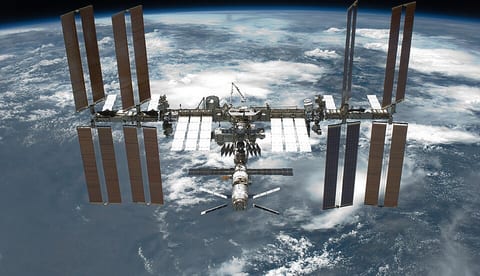
Artificial satellite
A machine launched into orbit, such as a weather or communications satellite.

Atmospheric pressure
The pressure caused by air molecules colliding with surfaces; it decreases with height.
Notes: Pressure in fluids
Atomic number
The number of protons in an atom's nucleus.
Notes: The structure of the atom · Radioactive decay and nuclear radiation
Attract
Pull together; unlike charges attract each other.
Notes: Static electricity and electric fields · Magnets and magnetic fields
B
Background radiation
Radiation around us all the time, from natural and man-made sources.
Balanced forces
Forces whose resultant is zero, so the object's motion does not change.
Notes: Resultant forces
Battery
Two or more cells joined together to give a bigger potential difference.
Becquerel
The unit of activity (Bq): one becquerel is one radioactive decay per second.
Beta particle
A fast electron given out by a nucleus when a neutron turns into a proton. Moderately ionising; stopped by a few millimetres of aluminium.
Notes: Radioactive decay and nuclear radiation · Contamination and irradiation · Uses of nuclear radiation
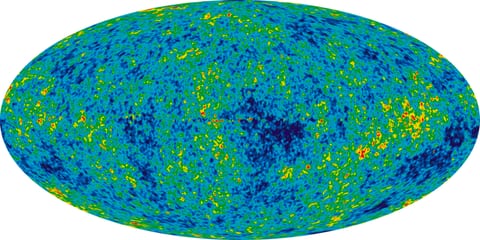
Big Bang theory
The theory that the universe began from a tiny, extremely hot and dense region and has expanded ever since.
Notes: Red-shift and the Big Bang

Biofuel
A renewable fuel made from plants or animal waste, burned in place of fossil fuels.
Notes: Energy resources
Black hole
What's left of the most massive stars; its gravity is so strong that not even light escapes.
Notes: The life cycle of stars
Braking distance
The distance travelled while the brakes slow the vehicle to a stop.
Notes: Stopping distances
C
Carbon-neutral
Adding no extra carbon dioxide overall; biofuel crops take in about as much as burning them releases.
Notes: Energy resources
Centre of mass
The point at which the weight of an object can be thought of as acting.
Notes: Weight, mass and gravity
Chain reaction
When neutrons from one fission go on to cause more fissions.
Notes: Nuclear fission and fusion
Charge
A property of particles such as electrons; charge flow is measured in coulombs (C).
Notes: Circuit symbols, charge and current · The structure of the atom · Models of the atom
Closed system
A system that no energy can enter or leave and no external force acts on, so its total energy and total momentum stay the same.
Notes: Energy stores and systems · Momentum
Colour filter
A transparent material that lets through only certain wavelengths (colours) of light and absorbs the rest.
Notes: Lenses and visible light
Compression
A region in a longitudinal wave where the particles are close together.
Concave lens
A lens, thinner in the middle, that makes parallel rays spread out.
Notes: Lenses and visible light
Conduction
Energy transfer through a material as vibrating particles pass energy on to their neighbours. Metals are the best conductors.
Notes: Reducing wasted energy
Conservation of energy
Energy can be transferred, stored or dissipated, but never created or destroyed.
Notes: Reducing wasted energy
Conservation of mass
In a change of state the total mass stays the same, because no particles are gained or lost.
Conservation of momentum
In a closed system, the total momentum before an event equals the total momentum after.
Notes: Momentum
Contact force
A force that acts only when objects touch, such as friction, air resistance or tension.
Notes: Scalars, vectors and interacting forces · Resultant forces
Contamination
Unwanted radioactive atoms getting onto or into an object or person.
Control rods
Rods that absorb neutrons to control the rate of the chain reaction in a reactor.
Notes: Nuclear fission and fusion
Control variable
A variable kept the same throughout an experiment, so that it is a fair test.
Notes: Specific heat capacity · Reducing wasted energy · Current, resistance and potential difference · Resistors and I–V characteristics · Density and states of matter · Forces and elasticity · Newton's laws of motion · Wave speed · Reflection and refraction · Infrared and black body radiation
Convex lens
A lens, thicker in the middle, that makes parallel rays meet at the principal focus.
Notes: Lenses and visible light
Coulomb
The unit of charge (C); 1 C flows past a point each second when the current is 1 A.
Notes: Electrical power and energy
Count rate
The number of decays recorded each second (or minute) by a detector.
D
Dark energy
An unknown cause that scientists think makes the universe's expansion speed up.
Notes: Red-shift and the Big Bang
Dark matter
Unseen matter that scientists think must exist to explain how galaxies hold together.
Notes: Red-shift and the Big Bang
Decay curve
A graph of activity against time for a radioactive source; it falls steeply, then levels off towards zero.
Notes: Half-life
Density
Mass per unit volume, ρ = m/V, measured in kg/m³ (or g/cm³).
Notes: Density and states of matter
Dependent variable
The variable you measure in an experiment, which changes because of the independent variable.
Notes: Specific heat capacity · Reducing wasted energy · Current, resistance and potential difference · Resistors and I–V characteristics · Density and states of matter · Forces and elasticity · Newton's laws of motion · Wave speed · Reflection and refraction · Infrared and black body radiation
Diffuse reflection
Reflection from a rough surface, scattering light in many directions.
Notes: Lenses and visible light
Diode
A component that lets current flow in one direction only, with a very high resistance in reverse.
Notes: Circuit symbols, charge and current · Resistors and I–V characteristics
Direct current
Current that flows in one direction only, as supplied by a cell or battery.
Notes: Mains electricity · Induced potential and transformers
Directly proportional
When one quantity doubles, the other doubles too; the graph is a straight line through the origin.
Notes: Current, resistance and potential difference · Resistors and I–V characteristics · Weight, mass and gravity · Forces and elasticity · Newton's laws of motion
Displacement
How far and in what direction an object ends up from its start, in a straight line (a vector). Also the water an object pushes aside, equal to its volume.
Notes: Density and states of matter · Speed, velocity and distance–time graphs · Transverse and longitudinal waves
Dissipated
Spread out into the surroundings and stored in a less useful way.
Notes: Reducing wasted energy
Distance
How far an object moves; a scalar.
Notes: Models of the atom · Moments, levers and gears · Speed, velocity and distance–time graphs · Acceleration and velocity–time graphs
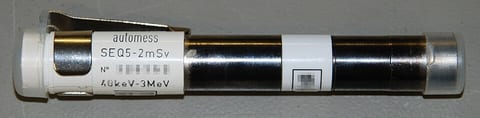
Dosimeter
A badge worn by people who work with radiation to record the dose they receive.

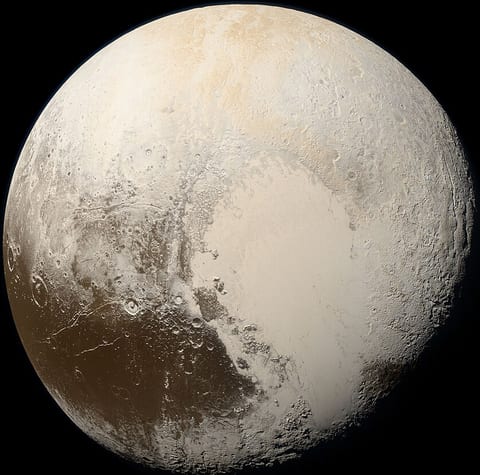
Dwarf planet
A smaller, planet-like body orbiting the Sun, such as Pluto.
Notes: The solar system
Image: NASA/Johns Hopkins University Applied Physics Laboratory, public domain

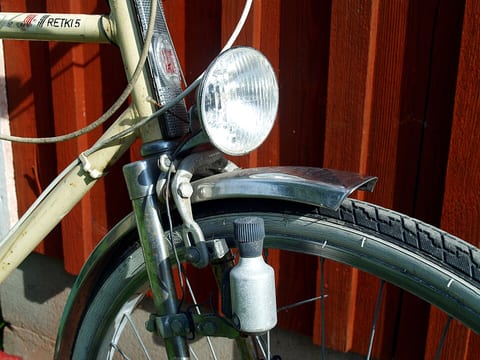
Dynamo
A generator that makes direct current, using a split-ring commutator.

E
Eardrum
A thin membrane in the ear that vibrates when sound waves reach it.
Notes: Sound and ultrasound
Earth wire
The green and yellow safety wire, at 0 V; it only carries a current if there is a fault.
Notes: Mains electricity
Echo sounding
Using reflected high-frequency sound to find the depth of water or detect objects.
Notes: Sound and ultrasound
Efficiency
The useful output energy (or power) divided by the total input energy (or power).
Notes: Power and efficiency
Elastic deformation
A change of shape that is undone when the forces are removed.
Notes: Forces and elasticity
Elastic potential energy
Energy in the store of a stretched or squashed object; Eₑ = ½ke².
Notes: Energy stores and systems · Calculating energy changes · Forces and elasticity
Electric current
The rate of flow of electrical charge, measured in amperes (A).
Notes: Circuit symbols, charge and current · Resistors and I–V characteristics · Series and parallel circuits · Mains electricity · Electrical power and energy · The National Grid · Electromagnetism · The motor effect · Induced potential and transformers
Electric field
The region around a charged object where another charged object feels a force.
Electric motor
A device in which a coil carrying a current spins in a magnetic field, because of the motor effect.
Notes: The motor effect
Electrical cell
A single source of potential difference in a circuit. Its symbol is a long thin line beside a short thick line.
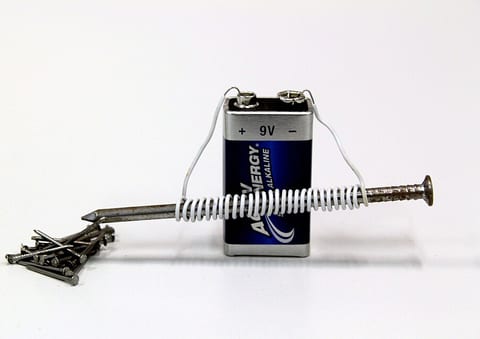
Electromagnet
A solenoid with an iron core, which is magnetic only while a current flows.
Notes: Electromagnetism

Electromagnetic spectrum
The continuous range of EM waves, from radio waves to gamma rays.
Notes: The electromagnetic spectrum
Electromagnetic wave
A transverse wave that transfers energy and travels at 3 × 10⁸ m/s in a vacuum.
Notes: The electromagnetic spectrum
Electron
A tiny negatively charged particle; it is what moves when objects are charged by friction.
Notes: Static electricity and electric fields · The structure of the atom · Models of the atom
Emitter
Something that gives out radiation; matt black surfaces are the best emitters.
Energy level
One of the fixed distances from the nucleus at which electrons can be found.
Energy store
A way energy is held by an object, such as its kinetic, thermal or chemical store.
Notes: Energy stores and systems
Energy transfer
Energy moving from one store to another, mechanically, electrically, by heating or by radiation.
Energy transferred
The work done when charge flows through a circuit, in joules (J).
Eureka can
A can with a spout; an object lowered in pushes out its own volume of water through the spout.
Notes: Density and states of matter
Expanding universe
The idea that galaxies are moving apart, so the universe is getting bigger.
Notes: Red-shift and the Big Bang
Extension
How much longer a spring gets when it is stretched, in metres.
F
Field line
A line showing the direction of a magnetic field, from north to south. The closer the lines, the stronger the field.
Notes: Static electricity and electric fields · Magnets and magnetic fields · Electromagnetism
Filament lamp
A lamp with a thin wire that glows when it gets hot. Its resistance increases as its temperature rises.
Notes: Circuit symbols, charge and current · Resistors and I–V characteristics
Fleming's left-hand rule
First finger = field, second finger = current, thumb = motion (force).
Notes: The motor effect
Focal length
The distance from the centre of a lens to its principal focus.
Notes: Lenses and visible light
Force
A push or pull on an object caused by its interaction with another object, measured in newtons (N).
Notes: Static electricity and electric fields · Particle motion in gases · Scalars, vectors and interacting forces · Weight, mass and gravity · Work done and energy transfer · Forces and elasticity · Moments, levers and gears · Pressure in fluids · Newton's laws of motion · Momentum · The motor effect
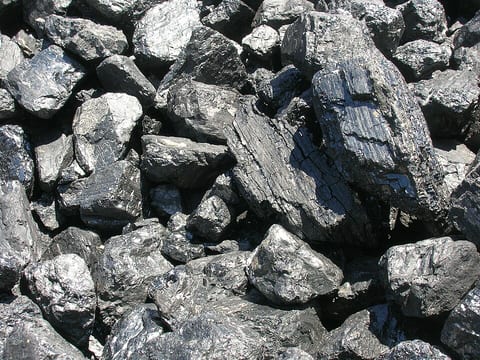
Fossil fuel
Coal, oil or natural gas, formed over millions of years from the remains of living things.
Notes: Energy resources

Free fall
Falling with only gravity acting; acceleration is about 9.8 m/s² near the Earth.
Free-body diagram
A diagram showing all the forces acting on one object as labelled arrows.
Notes: Resultant forces
Frequency
The number of waves passing a point each second, in hertz (Hz).
Notes: Mains electricity · Transverse and longitudinal waves · Wave speed · Reflection and refraction · The electromagnetic spectrum · The motor effect
Friction
A contact force that opposes sliding; doing work against it heats the surfaces.
Notes: Reducing wasted energy · Scalars, vectors and interacting forces · Work done and energy transfer
Fuse
A thin wire in the live wire that melts and breaks the circuit if the current gets too big.
Notes: Circuit symbols, charge and current · Mains electricity
G
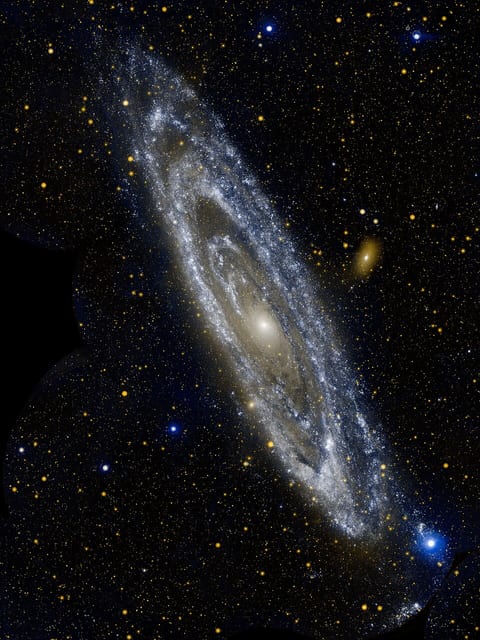
Galaxy
A huge collection of billions of stars held together by gravity.

Gamma emitter
An isotope that gives out gamma rays, which can pass out of the body.
Notes: Uses of nuclear radiation
Gamma ray
Electromagnetic radiation from a nucleus; weakly ionising and very penetrating.
Notes: Radioactive decay and nuclear radiation · Contamination and irradiation · Uses of nuclear radiation · Nuclear fission and fusion · The electromagnetic spectrum · Uses and dangers of electromagnetic waves
Gas pressure
The force per unit area from gas particles colliding with the walls of their container.
Notes: Particle motion in gases
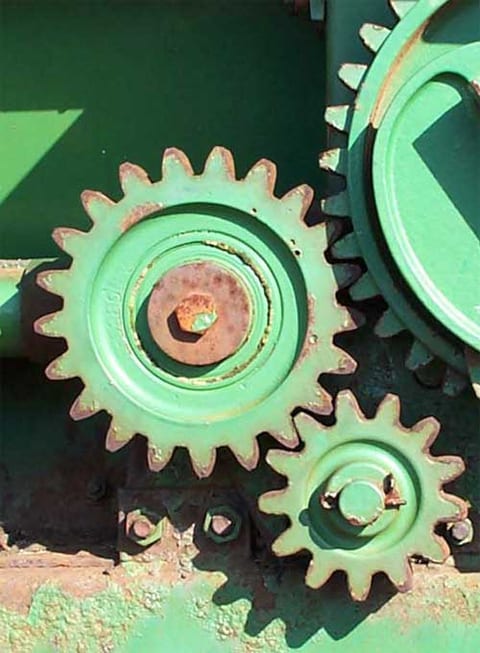
Gear
A toothed wheel that passes on a turning effect, changing its speed and size.
Notes: Moments, levers and gears

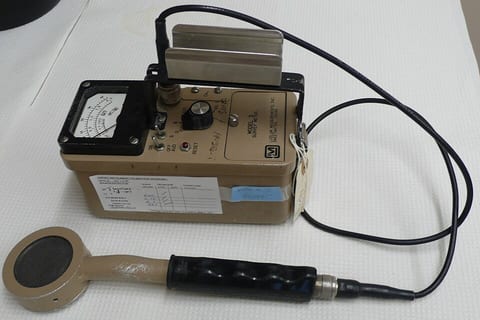
Geiger–Müller tube
A detector that counts each burst of radiation that passes through it, used to measure the count rate.

Generator effect
A pd being induced when a wire moves through a magnetic field or the field around it changes.
Geostationary orbit
An orbit taking 24 hours above the equator, so the satellite stays above the same spot.
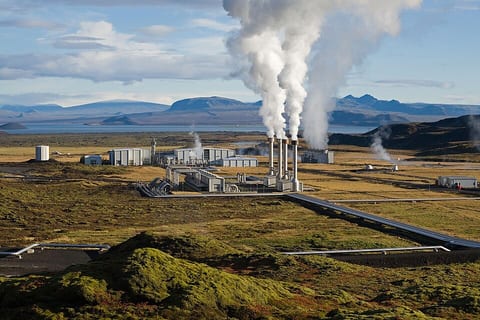
Geothermal energy
Energy from hot rocks underground, used to heat buildings or generate electricity. It is renewable, but only available in some places.
Notes: Energy resources

Gradient
The steepness of a line on a graph: change up the side ÷ change along the bottom.
Notes: Specific heat capacity · Forces and elasticity · Speed, velocity and distance–time graphs · Acceleration and velocity–time graphs
Gravitational field strength
The force of gravity on each kilogram of mass, g; about 9.8 N/kg on Earth.
Notes: Calculating energy changes · Weight, mass and gravity · Pressure in fluids
Gravitational force
The force of attraction between masses; it keeps planets and satellites in orbit.
Notes: Scalars, vectors and interacting forces · Weight, mass and gravity · The solar system · The life cycle of stars · Orbital motion and satellites
Gravitational potential energy
Energy in an object's gravitational potential store because of its height; Eₚ = mgh.
Notes: Energy stores and systems · Calculating energy changes
Greenhouse effect
Gases in the atmosphere absorbing infrared emitted by the Earth, keeping it warmer.
H
Half-life
The time for the number of unstable nuclei, or the count rate, to fall to half.
Notes: Half-life · Background radiation and hazards · Uses of nuclear radiation
Heating curve
A graph of temperature against time while heating; its flat parts show changes of state.
Notes: Specific latent heat
Hertz
The unit of frequency (Hz): one hertz is one wave, or one cycle, per second.
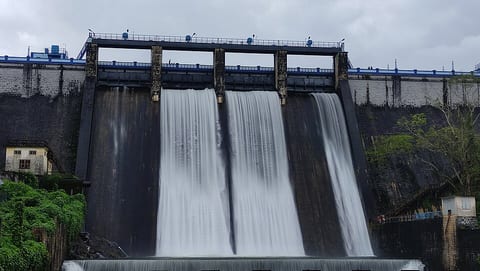
Hydro-electricity
Electricity generated by water from a dam flowing through turbines. It is renewable and reliable, but dams flood valleys.
Notes: Energy resources

I
I–V characteristic
A graph of current against potential difference for a component.
Independent variable
The variable you change in an experiment, to see what effect it has.
Notes: Specific heat capacity · Reducing wasted energy · Current, resistance and potential difference · Resistors and I–V characteristics · Density and states of matter · Forces and elasticity · Newton's laws of motion · Wave speed · Reflection and refraction · Infrared and black body radiation
Induced magnet
A material that becomes a magnet only while it is in a magnetic field.
Notes: Magnets and magnetic fields
Induced potential difference
A pd produced across a wire by a changing magnetic field.
Inelastic deformation
A change of shape that stays after the forces are removed.
Notes: Forces and elasticity
Inertia
The tendency of an object to stay at rest or keep moving at a steady velocity.
Notes: Newton's laws of motion
Inertial mass
How hard it is to change an object's velocity; force ÷ acceleration.
Notes: Newton's laws of motion
Infrared radiation
EM radiation that all objects emit and absorb; hotter objects emit more.
Notes: Uses and dangers of electromagnetic waves · Infrared and black body radiation
Internal energy
The total kinetic energy and potential energy of all the particles in a system.
Notes: Changes of state and internal energy · Particle motion in gases
Ion
An atom that has lost or gained electrons, so it has an overall charge.
Notes: The structure of the atom · Radioactive decay and nuclear radiation
Ionising
Able to knock electrons off atoms, turning them into ions.
Ionising radiation
Radiation that can knock electrons off atoms, damaging cells; X-rays and gamma rays are ionising.
Iron core
A piece of iron inside a coil that makes its magnetic field much stronger, as in an electromagnet or a transformer.
Notes: Electromagnetism · Induced potential and transformers
Irradiation
Exposing an object to radiation from an outside source; the object does not become radioactive.
Isotope
An atom of the same element with a different number of neutrons.
Notes: The structure of the atom
J
Joulemeter
A meter that measures the energy transferred electrically, in joules.
Notes: Specific heat capacity
K
Kinetic energy
Energy in an object's kinetic store because it is moving; Eₖ = ½mv².
Notes: Energy stores and systems · Calculating energy changes · Electrical power and energy · Changes of state and internal energy · Stopping distances
L
Latent heat of fusion
The specific latent heat for changing between solid and liquid.
Notes: Specific latent heat
Latent heat of vaporisation
The specific latent heat for changing between liquid and gas.
Notes: Specific latent heat
LDR
A light-dependent resistor; its resistance decreases as light intensity increases.
Notes: Circuit symbols, charge and current · Resistors and I–V characteristics
LED
A light-emitting diode: a diode that gives out light when a current flows through it in the forward direction.
Notes: Circuit symbols, charge and current · Resistors and I–V characteristics
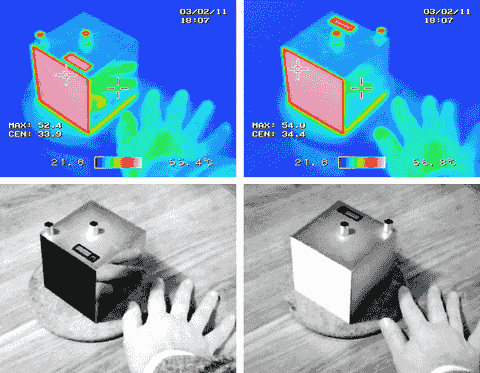
Leslie cube
A hollow metal cube with differently finished sides, filled with hot water, used to compare how much infrared each surface emits.

Lever
A bar that turns about a pivot; a small force far from the pivot can make a bigger force near it.
Notes: Moments, levers and gears
Light gate
A sensor that times how long an object takes to pass through a beam, so its speed can be found.
Notes: Newton's laws of motion
Limit of proportionality
The point beyond which extension is no longer directly proportional to force.
Live wire
The brown wire, at about 230 V; it carries the alternating pd from the supply.
Notes: Mains electricity
Longitudinal wave
A wave whose oscillations are parallel to the direction of energy transfer, such as sound.
Notes: Transverse and longitudinal waves · Sound and ultrasound
Loudspeaker
A device that uses the motor effect: a changing current in a coil makes a cone vibrate, producing sound waves.
Notes: The motor effect
Lubrication
Putting oil or grease between moving parts to reduce friction.
M
Magnetic field
The region around a magnet where another magnet or magnetic material feels a force.
Notes: Magnets and magnetic fields · Electromagnetism · The motor effect · Induced potential and transformers
Magnetic flux density
The strength of a magnetic field, B, measured in tesla (T).
Notes: The motor effect
Magnetic material
A material attracted to a magnet, such as iron, steel, cobalt or nickel.
Notes: Magnets and magnetic fields
Magnetic pole
One of the two ends of a magnet, north or south, where its forces are strongest.
Notes: Magnets and magnetic fields
Main sequence star
A stable star fusing hydrogen into helium, with gravity balanced by outward pressure.
Notes: The life cycle of stars
Mass
The amount of matter in an object, in kilograms; it doesn't change from place to place.
Notes: Specific heat capacity · Density and states of matter · Changes of state and internal energy · The structure of the atom · Weight, mass and gravity · Newton's laws of motion · The life cycle of stars
Mass number
The total number of protons and neutrons in an atom's nucleus.
Notes: The structure of the atom · Radioactive decay and nuclear radiation
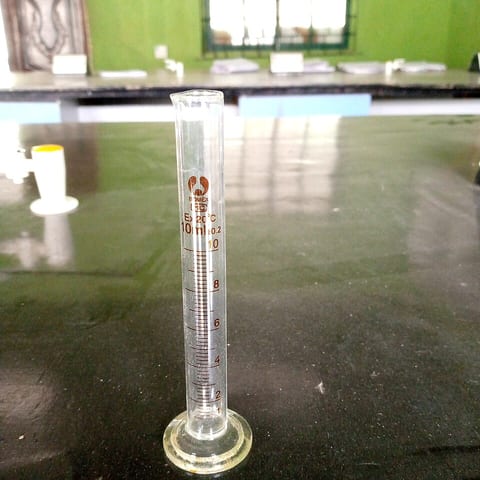
Measuring cylinder
A tall container with a scale, used to measure a liquid's volume, read at the bottom of the meniscus.
Notes: Density and states of matter

Medical tracer
A radioactive isotope put into the body so a detector can follow where it goes.
Notes: Uses of nuclear radiation
Meniscus
The curved surface of a liquid in a measuring cylinder; read volumes from the bottom of it.
Notes: Density and states of matter
Microphone
A device that uses the generator effect: sound waves move a coil in a magnetic field, inducing a changing potential difference.
Microwaves
Electromagnetic waves between radio waves and infrared, used for satellite communications and cooking food.


Moderator
A material in a reactor that slows neutrons down so they are more likely to cause fission.
Notes: Nuclear fission and fusion
Moment
The turning effect of a force, M = Fd, in newton-metres (N m).
Notes: Moments, levers and gears
Mutation
A change in a gene, which can lead to cancer.
N
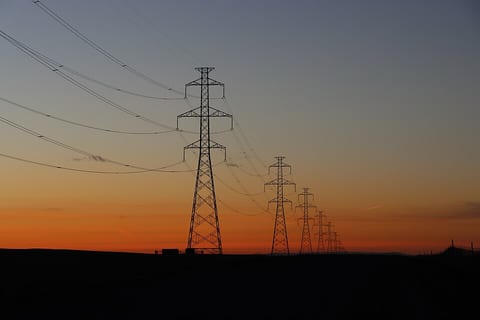
National Grid
The network of cables and transformers that links power stations to consumers.
Notes: The National Grid · Induced potential and transformers

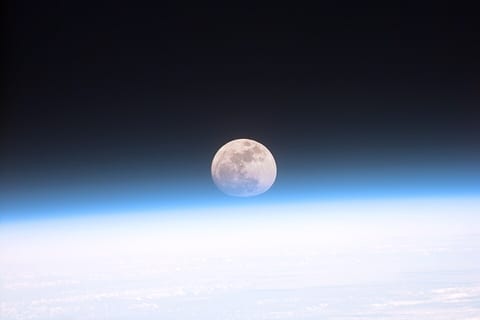

Net decline
The total fall in activity (or nuclei) over a given time: the starting value minus the value left.
Notes: Half-life
Neutron
An uncharged particle in the nucleus, discovered by James Chadwick in 1932.
Notes: The structure of the atom · Models of the atom · Radioactive decay and nuclear radiation · Nuclear fission and fusion · The life cycle of stars
Neutron star
The extremely dense core left behind after a supernova, made almost entirely of neutrons.
Notes: The life cycle of stars
Newton
The unit of force (N). A force of one newton gives a mass of 1 kg an acceleration of 1 m/s².
Notes: Scalars, vectors and interacting forces · Weight, mass and gravity · Work done and energy transfer
Newton-metre
The work done when a force of 1 N moves an object 1 m; 1 N m = 1 J.
Newton's first law
If the resultant force is zero, an object stays still or keeps moving at the same velocity.
Notes: Newton's laws of motion
Newton's second law
Acceleration is proportional to the resultant force and inversely proportional to mass: F = ma.
Notes: Newton's laws of motion
Newton's third law
When two objects interact, they exert equal and opposite forces on each other.
Notes: Newton's laws of motion
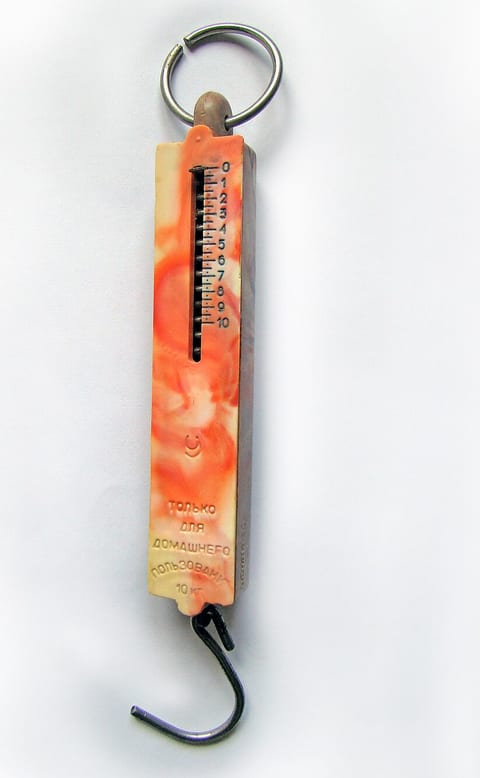
Newtonmeter
A calibrated spring balance used to measure weight and other forces.
Notes: Weight, mass and gravity

Non-contact force
A force that acts between objects that are apart, such as gravity, magnetism or electrostatic force.
Notes: Static electricity and electric fields · Scalars, vectors and interacting forces · Magnets and magnetic fields
Non-renewable energy resource
A resource that will run out, such as coal, oil, gas or nuclear fuel.
Notes: Energy resources
Normal
A line drawn at right angles to a surface where a ray hits it.
Notes: Reflection and refraction
Nuclear fission
The splitting of a large nucleus into two smaller ones, releasing energy and neutrons.
Notes: Nuclear fission and fusion
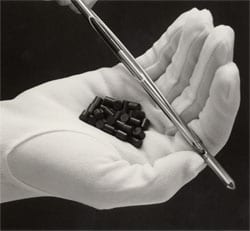
Nuclear fuel
A substance, such as uranium or plutonium, whose nuclei release energy by fission in a nuclear power station.
Notes: Energy resources

Nuclear fusion
The joining of two light nuclei to make a heavier nucleus, releasing energy.
Nuclear model
A model of the atom with a tiny positive nucleus surrounded by electrons.
Notes: Models of the atom
Nucleus
The tiny, dense centre of an atom, made of protons and neutrons, with almost all its mass.
Notes: The structure of the atom · Models of the atom · Half-life · Nuclear fission and fusion · The electromagnetic spectrum · The life cycle of stars
O
Ohm
The unit of resistance (Ω); a 1 Ω resistor lets 1 A flow when the pd across it is 1 V.
Ohmic conductor
A conductor whose current is directly proportional to the pd across it, at constant temperature.
Opaque
Lets no light through. An opaque object's colour depends on which wavelengths it reflects.
Notes: Lenses and visible light
Orbit
The curved path of one object around another, kept in place by gravity.
Oscillation
A regular back-and-forth movement, such as charges moving in an alternating current.
Notes: The electromagnetic spectrum
P
P-wave
A longitudinal seismic wave that can travel through solids and liquids.
Notes: Sound and ultrasound
Parallel circuit
A circuit with separate branches; each branch has the full supply pd across it.
Notes: Series and parallel circuits
Particle model
The idea that all matter is made of tiny particles, whose arrangement and movement explain its properties.
Notes: Density and states of matter
Pascal
The unit of pressure (Pa); 1 Pa is a force of 1 N on each square metre.
Notes: Particle motion in gases
Peer review
Other scientists checking a study's methods and results before it is accepted.
Penetrating
Able to pass through materials; gamma is the most penetrating, alpha the least.
Notes: Uses of nuclear radiation
Perfect black body
An object that absorbs all the radiation that hits it; it is also the best possible emitter.
Period
The time for one complete wave to pass a point; T = 1/f.
Permanent magnet
A magnet that produces its own magnetic field all the time.
Notes: Magnets and magnetic fields
Physical change
A change, such as melting, where no new substance is made and it can be reversed.
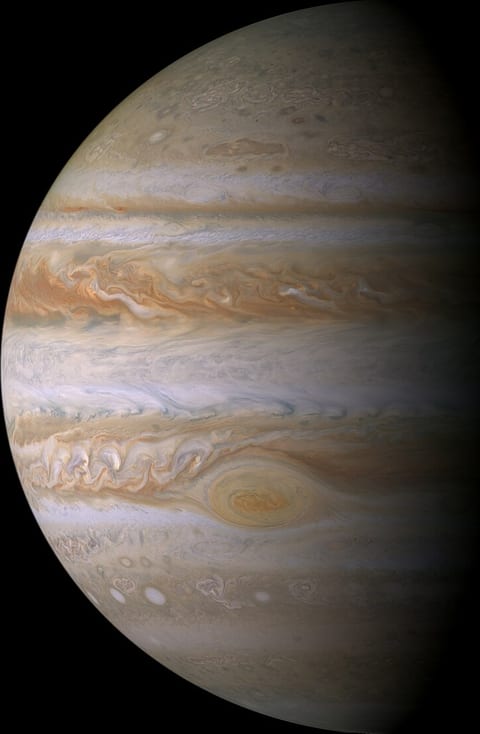
Planet
A large body that orbits a star; our Solar System has eight.

Plotting compass
A small compass whose needle points along the magnetic field, used to draw field lines.
Notes: Magnets and magnetic fields
Plum pudding model
Thomson's model of the atom: a ball of positive charge with negative electrons embedded in it.
Notes: Models of the atom
Potential difference
The energy transferred per unit of charge between two points, measured in volts (V).
Notes: Circuit symbols, charge and current · Current, resistance and potential difference · Resistors and I–V characteristics · Series and parallel circuits · Mains electricity · Electrical power and energy · Static electricity and electric fields · Induced potential and transformers
Power
The rate at which energy is transferred or work is done.
Notes: Power and efficiency · Electrical power and energy · Nuclear fission and fusion
Power rating
The power of an appliance, in watts; how much energy it transfers each second.
Notes: Electrical power and energy
Pressure
The force acting at right angles to a surface, per unit area; p = F/A, in pascals (Pa).
Notes: Particle motion in gases · Pressure in fluids · The motor effect
Principal focus
The point where parallel rays meet (or seem to come from) after passing through a lens.
Notes: Lenses and visible light
Principle of moments
For a balanced object, the total clockwise moment equals the total anticlockwise moment.
Notes: Moments, levers and gears
Proton
A positively charged particle in the nucleus, with a relative mass of 1 and a relative charge of +1.
R
Radiation dose
A measure of the risk of harm from radiation, in sieverts (Sv).
Notes: Background radiation and hazards · Uses and dangers of electromagnetic waves
Radio waves
The electromagnetic waves with the longest wavelengths, used for television and radio broadcasts.
Notes: The electromagnetic spectrum · Uses and dangers of electromagnetic waves
Radioactive decay
The random process in which an unstable nucleus gives out radiation to become more stable.
Radon
A radioactive gas that seeps out of some rocks; a major source of background radiation.
Random
Impossible to predict for a single nucleus, though the pattern for many is predictable.
Random motion
Movement in all directions at different speeds, with no pattern.
Notes: Particle motion in gases
Rarefaction
A region in a longitudinal wave where the particles are spread out.
Rate of change of momentum
How quickly momentum changes; it equals the resultant force.
Notes: Momentum
Ray box
A lamp in a box with a narrow slit, used to make a thin beam of light for experiments on reflection and refraction.
Notes: Reflection and refraction
Ray diagram
A drawing that shows the paths of light rays as straight lines with arrows, such as through a lens.
Notes: Reflection and refraction
Reaction time
The time between a driver seeing a hazard and acting on it; typically 0.2–0.9 s.
Notes: Stopping distances
Real image
An image formed where light rays actually meet; it can be shown on a screen.
Notes: Lenses and visible light
Red giant
A large, cool star that a Sun-sized star swells into once its core hydrogen runs out.
Notes: The life cycle of stars
Red supergiant
The huge star that a star much bigger than the Sun becomes when it runs out of hydrogen, before it explodes as a supernova.
Notes: The life cycle of stars
Red-shift
An increase in the wavelength of light from galaxies moving away from us.
Notes: Red-shift and the Big Bang
Refraction
The change in direction of a wave when it changes speed as it passes into a different material.
Notes: Reflection and refraction
Relay
A switch worked by an electromagnet, letting a small current control a larger one.
Notes: Electromagnetism
Renewable energy resource
A resource that is being (or can be) replenished as it is used, such as wind or solar.
Notes: Energy resources
Repel
Push apart; like charges repel each other.
Notes: Static electricity and electric fields · Magnets and magnetic fields
Resistance
How much a component opposes the current, measured in ohms (Ω).
Notes: Power and efficiency · Current, resistance and potential difference · Resistors and I–V characteristics · Mains electricity · Electrical power and energy · Scalars, vectors and interacting forces · Acceleration and velocity–time graphs
Resistor
A component that resists the current. Through a fixed resistor at constant temperature, current is directly proportional to potential difference.
Resolving a force
Splitting a force into two components at right angles that have the same effect together.
Notes: Resultant forces
Resultant force
The single force that has the same effect as all the forces acting on an object.
Notes: Resultant forces · Pressure in fluids · Newton's laws of motion
Right-hand grip rule
Thumb points along the current; curled fingers show the direction of the magnetic field.
Notes: Electromagnetism
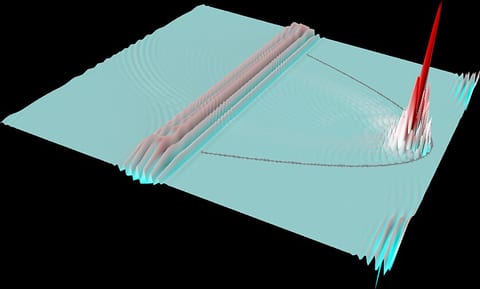

S
Scalar
A quantity with size only, such as speed, distance or mass.
Notes: Scalars, vectors and interacting forces · Speed, velocity and distance–time graphs
Seismic wave
A wave from an earthquake that travels through the Earth. P-waves are longitudinal and S-waves are transverse.
Notes: Sound and ultrasound
Series circuit
A circuit where components are in one loop, so the same current flows through each.
Notes: Series and parallel circuits
Sievert
The unit of radiation dose (Sv); 1 Sv = 1000 mSv.
Notes: Background radiation and hazards · Uses and dangers of electromagnetic waves
Signal generator
A device that produces an alternating signal of a chosen frequency.
Notes: Wave speed
Slip rings
Rings that connect the spinning coil of an alternator to the circuit, so the current it makes stays alternating.
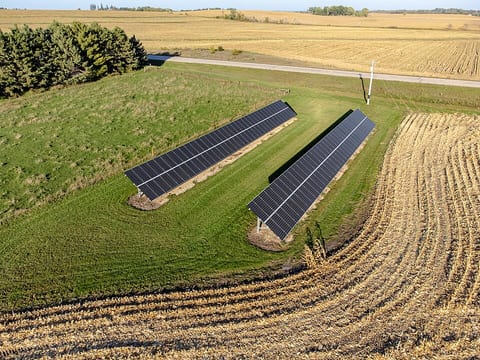
Solar power
Electricity generated from sunlight by solar cells, or energy from the Sun heating water. It is renewable, but not available at night.
Notes: Energy resources

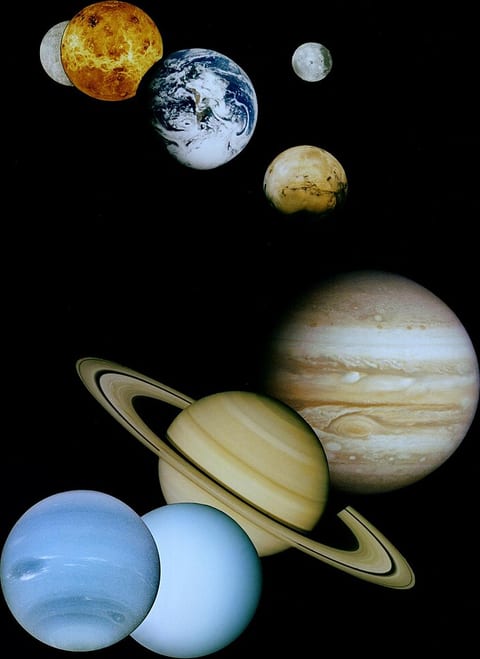
Solar System
The Sun and everything that orbits it: planets, dwarf planets, moons, asteroids and comets.
Notes: The solar system

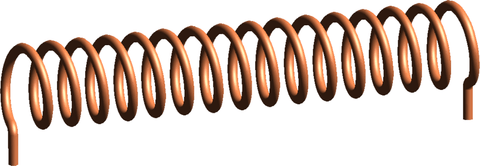
Solenoid
A coil of wire; when a current flows, it has a strong, uniform field inside.
Notes: Electromagnetism

Sound wave
A longitudinal wave of vibrating particles that travels through solids, liquids and gases, but not through a vacuum.
Notes: The motor effect
Specific heat capacity
The energy needed to raise the temperature of 1 kg of a material by 1 °C, in J/kg °C.
Notes: Specific heat capacity
Specific latent heat
The energy needed to change the state of 1 kg of a substance with no change in temperature, in J/kg.
Notes: Specific latent heat
Specular reflection
Reflection from a smooth surface in a single direction.
Notes: Lenses and visible light
Speed
How fast an object moves: the distance travelled per second; a scalar.
Notes: Speed, velocity and distance–time graphs · Newton's laws of motion · Stopping distances · Reflection and refraction · The electromagnetic spectrum · Orbital motion and satellites
Split-ring commutator
A split ring that reverses the current in a motor's coil every half turn.
Notes: The motor effect · Induced potential and transformers
Spring constant
The force needed to stretch a spring by 1 m, in N/m; stiffer springs have bigger values.
Notes: Forces and elasticity
Static electricity
Charge that builds up on an insulator, usually when it is rubbed.
Step-down transformer
A transformer that decreases the pd, used before electricity reaches homes.
Notes: The National Grid · Induced potential and transformers
Step-up transformer
A transformer that increases the pd, used where electricity leaves a power station.
Notes: The National Grid · Induced potential and transformers
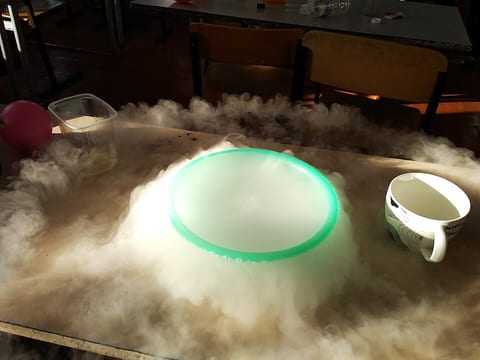
Sublimation
Changing straight from a solid to a gas without becoming a liquid.

Supernova
The huge explosion of a very massive star at the end of its life.
Switch
A component that opens or closes a circuit, turning the current off or on.
Notes: Circuit symbols, charge and current · Mains electricity · Electromagnetism
T
Tangent
A straight line that just touches a curve at one point; its gradient gives the rate at that point.
Temperature
A measure related to the average kinetic energy of the particles in a substance.
Notes: Reducing wasted energy · Resistors and I–V characteristics · Changes of state and internal energy · Specific latent heat · Particle motion in gases · Nuclear fission and fusion · Work done and energy transfer · Infrared and black body radiation
Temperature change
The final temperature minus the starting temperature, Δθ, in °C.
Terminal velocity
The steady speed a falling object reaches when air resistance equals its weight.
Thermal conductivity
How quickly energy is transferred through a material by conduction.
Notes: Reducing wasted energy
Thermal energy store
The store of energy in an object because of its temperature; it fills as the object heats up.
Notes: Energy stores and systems · Specific heat capacity · Electrical power and energy · Work done and energy transfer · Stopping distances
Thermal insulator
A material with a low thermal conductivity, such as wool, foam or trapped air.
Notes: Reducing wasted energy
Thermistor
A resistor whose resistance decreases as its temperature increases.
Notes: Circuit symbols, charge and current · Resistors and I–V characteristics
Three-core cable
A mains cable with three insulated wires inside: live (brown), neutral (blue) and earth (green and yellow).
Notes: Mains electricity

Tidal power
Electricity generated by the tides moving water through turbines. It is renewable and predictable.
Notes: Energy resources

Total resistance
The resistance of a whole circuit; in series it is the sum of the separate resistances.
Notes: Series and parallel circuits
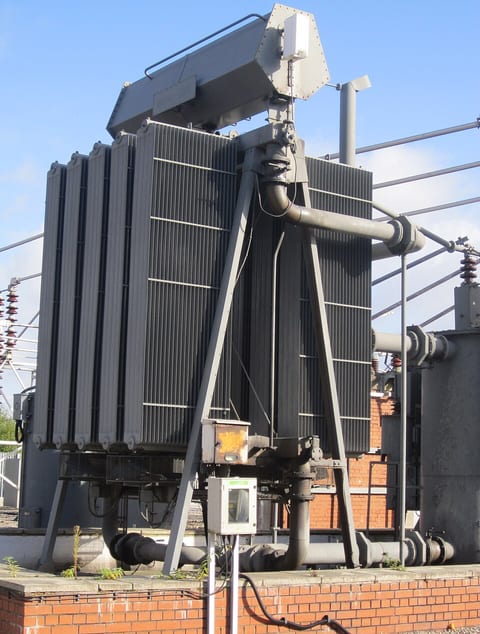
Transformer
A device with two coils on an iron core that changes the size of an alternating pd.
Notes: The National Grid · Induced potential and transformers

Translucent
Lets light through but scatters it, so you can't see clearly through it, like frosted glass.
Notes: Lenses and visible light
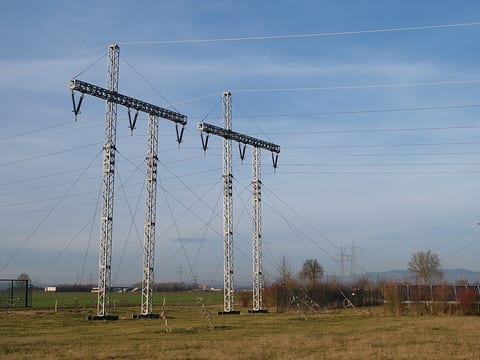
Transmission cables
The high-voltage cables, often on pylons, that carry electricity across the country.
Notes: The National Grid

Transparent
Lets light through without scattering it, so you can see clearly through it, like clear glass.
Notes: Lenses and visible light
Transverse wave
A wave whose oscillations are at right angles to the direction of energy transfer, such as light.
Notes: Transverse and longitudinal waves · Sound and ultrasound · The electromagnetic spectrum
U
Ultrasound
Sound with a frequency above 20 kHz, too high for humans to hear.
Notes: Sound and ultrasound
Ultraviolet
EM waves just beyond violet light; they can damage skin and cause skin cancer.
Notes: The electromagnetic spectrum · Uses and dangers of electromagnetic waves
Upthrust
The upward resultant force on an object in a fluid, caused by greater pressure on its bottom surface.
Notes: Pressure in fluids
Useful energy
Energy transferred to the store you want, such as light from a lamp.
Notes: Power and efficiency
V
Variable resistor
A resistor whose resistance can be changed, to control the current in a circuit.
Notes: Circuit symbols, charge and current · Resistors and I–V characteristics
Vector
A quantity with size and direction, such as velocity, displacement or force.
Notes: Scalars, vectors and interacting forces · Speed, velocity and distance–time graphs · Momentum
Velocity
Speed in a given direction; a vector.
Notes: Speed, velocity and distance–time graphs · Acceleration and velocity–time graphs · Newton's laws of motion · Orbital motion and satellites
Virtual image
An image formed where rays only seem to come from; it can't be shown on a screen.
Notes: Lenses and visible light
Visible light
The only part of the electromagnetic spectrum our eyes detect, from red (longest wavelength) to violet (shortest).
Notes: The electromagnetic spectrum · Uses and dangers of electromagnetic waves
Voltmeter
A meter connected in parallel across a component to measure potential difference.
Notes: Circuit symbols, charge and current · Current, resistance and potential difference · Resistors and I–V characteristics
W
Wasted energy
Energy transferred to stores you don't want, usually the thermal store of the surroundings.
Notes: Power and efficiency
Watt
The unit of power; 1 W is 1 joule transferred per second.
Wavefront
A line joining the same point on each part of a wave, such as all the crests.
Notes: Reflection and refraction
Wavelength
The distance from a point on one wave to the same point on the next wave.
Notes: Transverse and longitudinal waves · Wave speed · Reflection and refraction · The electromagnetic spectrum · Infrared and black body radiation · Lenses and visible light
Weight
The force acting on an object due to gravity, measured in newtons (N).
Notes: Weight, mass and gravity · Resultant forces · Pressure in fluids · Newton's laws of motion
White dwarf
The small, hot, dense core left behind by a Sun-sized star.
Notes: The life cycle of stars
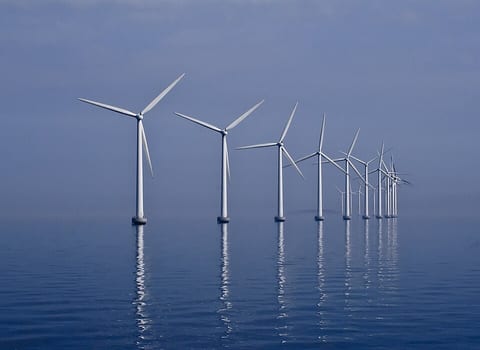
Wind power
Electricity generated by the wind turning turbines. It is renewable, but only works when the wind blows.
Notes: Energy resources

Work done
The energy transferred when a force moves an object; W = Fs.
Notes: Power and efficiency · Particle motion in gases · Work done and energy transfer · Forces and elasticity · Stopping distances
X
X-rays
Ionising electromagnetic waves with a very short wavelength. They pass through soft tissue but are absorbed by bone, so are used for medical images.