Exam skills: the historic environment
The historic environment questions
Whitechapel is Paper 1, Section A. It's worth 16 marks.
| Question | Marks | AO | Time |
|---|---|---|---|
| 1(a) Describe one feature of… | 2 | AO1 | about 3 minutes |
| 1(b) Describe one feature of… | 2 | AO1 | about 3 minutes |
| 2(a) How useful are Sources A and B for an enquiry into…? | 8 | AO3 | about 12 minutes |
| 2(b) How could you follow up Source A to find out more about…? | 4 | AO3 | about 6 minutes |
AO3 is about analysing and evaluating sources from the time.
Key terms
The sources for the model answer
Enquiry: How useful are Sources A and B for an enquiry into attitudes to crime and policing in Whitechapel in the late 1880s?
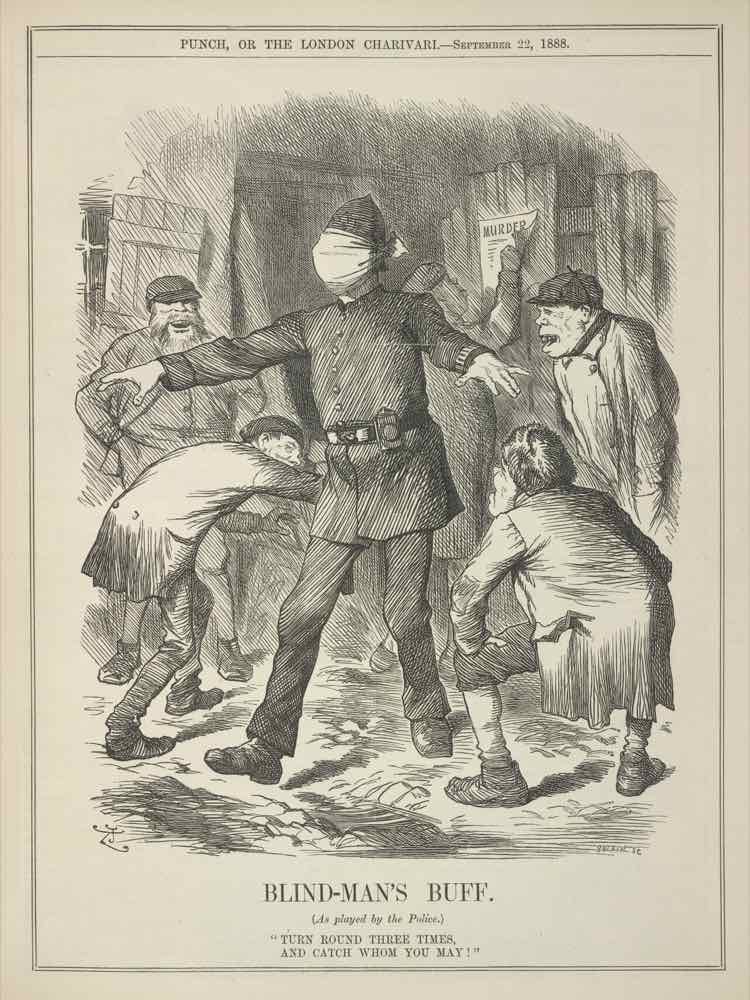
('Tom Tiddler's ground' and 'Eldorado' both mean a place where people hope to find money easily; 'buffoonery' means clowning.)
Key terms
Model answer: usefulness (8 marks)
Method: for each source, judge its usefulness using its , its , and your .
Model answer: Source A is useful because it shows that many people thought the police were failing to catch criminals. Its provenance makes it useful for attitudes: Punch was a popular magazine, so it reflects what many readers thought. I know the police were widely criticised in the press in September 1888, when no one had been caught for the murders. However, it is a cartoon meant to make readers laugh, so it exaggerates.
Source B is useful because Booth suggests that people in Whitechapel were used to crime. Booth researched poverty carefully, but he was an outsider, so this is his impression, not the residents' view.
Key terms
Model answer: follow-up (4 marks)
Method: complete four steps: a detail in the source, a question about it, a type of source that could answer it, and how it would help.
Question: How could you follow up Source B to find out more about crime in Whitechapel?
Model answer:
- Detail I would follow up: Booth says people in Whitechapel could 'accept murder as a dramatic incident'.
- Question I would ask: How common were violent crimes in Whitechapel in the 1880s?
- Type of source: H Division's police records of crimes reported.
- How this might help: they would show how many violent crimes were actually reported, so I could see whether Booth's impression was accurate.
Common mistake
The type of source you choose must be able to answer your question. Police records can show how many crimes were reported; they could not show how residents felt about the police.