The Cuban Missile Crisis
The Cuban Revolution, 1959
In 1959, led a revolution that overthrew Cuba's government, which the USA had supported. Cuba is only about 90 miles from the USA.
Castro took over American-owned businesses and land in Cuba. The USA refused to recognise his government, and stopped trading with Cuba. Castro turned to the Soviet Union, which bought Cuban sugar and sent aid and weapons.
Significance: the USA now had a communist-friendly government on its doorstep.
Key terms
The Bay of Pigs, April 1961
In April 1961, about 1,400 Cuban exiles, trained and armed by the American CIA, landed at the in Cuba, aiming to overthrow Castro. They were defeated within days.
Consequences:
- It was a humiliation for the new President, Kennedy, who had approved it.
- Castro moved closer to the Soviet Union, and soon declared himself a communist.
- Khrushchev concluded that Kennedy was weak.
Key terms
The crisis, October 1962
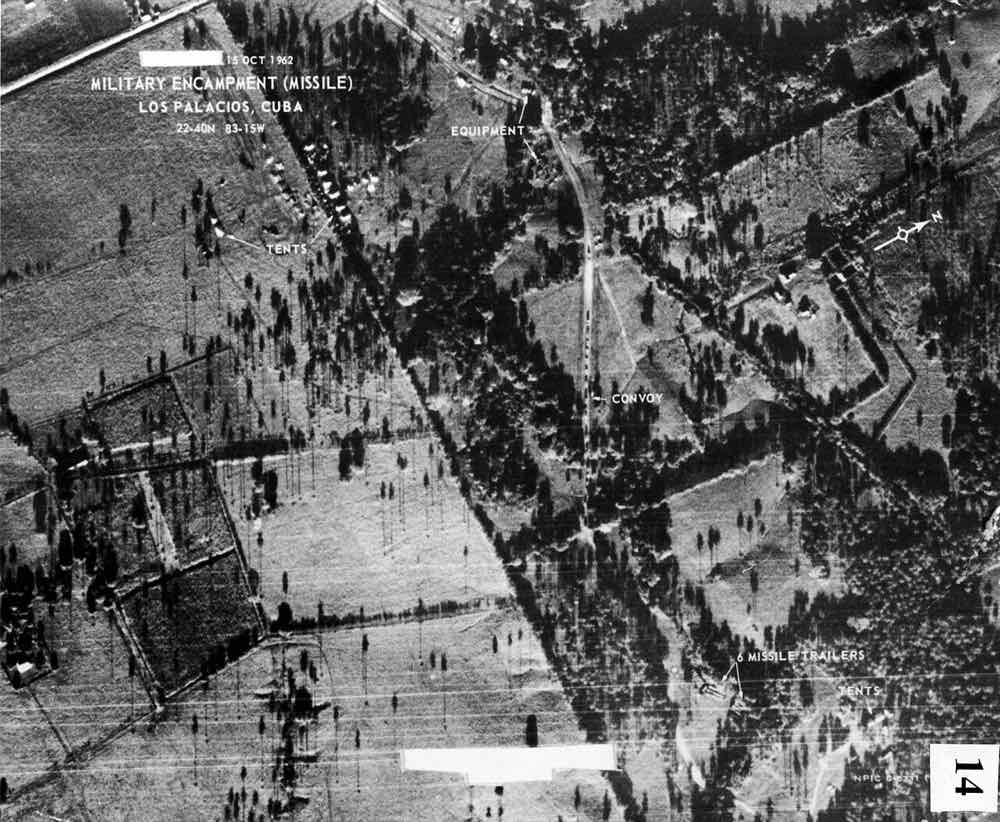
In 1962, the USSR secretly began building nuclear missile sites in Cuba. Khrushchev wanted to protect Cuba, and to match the American missiles in Turkey, near the USSR.
| Date | Event |
|---|---|
| 16 October 1962 | Kennedy is shown U-2 photographs of the missile sites |
| 22 October 1962 | Kennedy announces a naval 'quarantine' (blockade) of Cuba on television |
| 28 October 1962 | Khrushchev agrees to remove the missiles |
In between, Soviet ships heading for Cuba turned back at the blockade, and on 27 October a U-2 was shot down over Cuba. Many feared nuclear war.
Key terms
Kennedy's broadcast, 22 October 1962
('Quarantine' means a blockade; 'a full retaliatory response' means a nuclear counter-attack.)
How the crisis ended
Khrushchev sent Kennedy two letters. The first offered to remove the missiles if the USA promised not to invade Cuba. The second also demanded that the USA remove its missiles from Turkey.
Kennedy publicly accepted the first offer. In secret, his brother Robert Kennedy also agreed that the American missiles in Turkey would be removed.
On 28 October 1962, Khrushchev agreed to remove the missiles from Cuba.
The consequences
- : a direct telephone link between Washington and Moscow, so the leaders could talk quickly in a crisis.
- : banned nuclear tests in the atmosphere, in space and underwater.
- The Outer Space Treaty (1967): banned nuclear weapons in space.
- The Nuclear Non-Proliferation Treaty (1968): aimed to stop nuclear weapons spreading to more countries.
Kennedy's reputation rose. Khrushchev's fell, because the deal over Turkey was secret, and he was removed from power in 1964. Cuba remained communist.
Significance: both sides had seen how close they came to nuclear war, and began to try to control the arms race.
Remember
The treaties after the crisis: Test Ban (1963), Outer Space (1967), Non-Proliferation (1968).