The Berlin Blockade and NATO
Germany and Berlin divided
As agreed at Yalta and Potsdam, Germany was divided into four , run by the USA, Britain, France and the USSR. Berlin, the capital, was deep inside the Soviet zone, and was also divided into four sectors.
Tension: the West wanted Germany to recover, so it could trade and stand against communism. Stalin wanted a weak Germany that could never invade the USSR again, and paid reparations.
In 1947 the US and British zones were joined into , and the French zone joined them in 1948. In June 1948, the West brought in a new currency, the , in its zones and in West Berlin.
Key terms
The Berlin Blockade, June 1948–May 1949
Causes: Stalin saw the new currency as a step towards a separate West German state. West Berlin was also a prosperous, Western-run city inside the Soviet zone.
In June 1948, Stalin cut all road, rail and canal links into West Berlin. He hoped the West would give up the city, or abandon its plans for West Germany.
The West responded with the . For almost a year, American and British planes flew in food, coal and supplies, at times landing every few minutes. Stalin did not shoot them down, as that would have meant war.
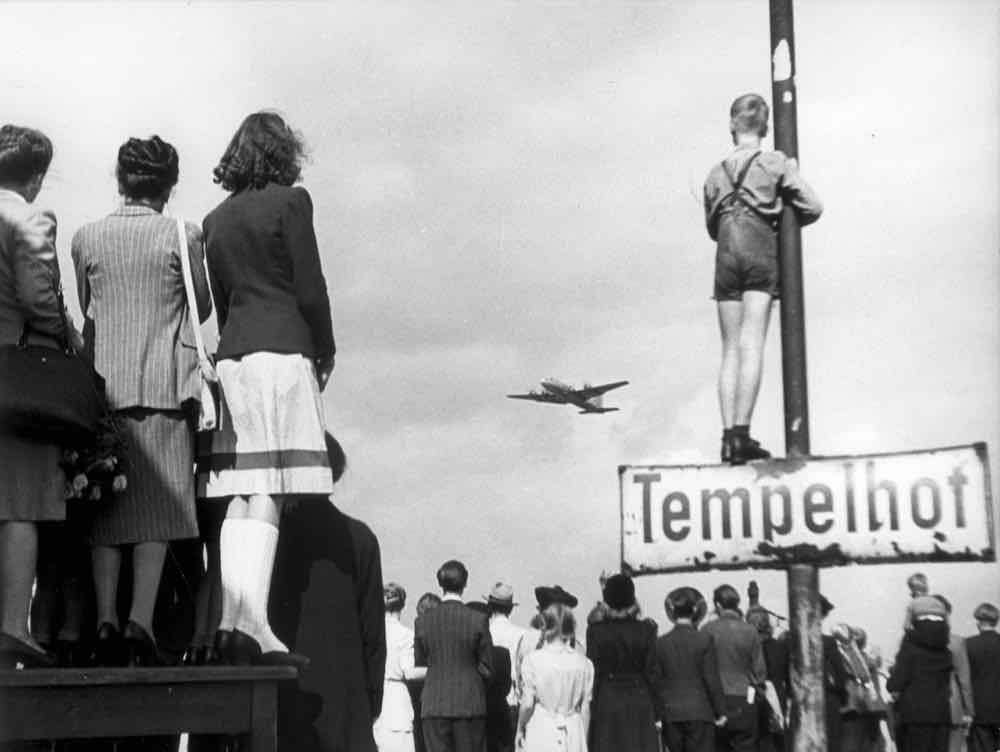
In May 1949, Stalin lifted the blockade.
Key terms
The impact of the Berlin Crisis
Consequences:
- A Western victory: West Berlin survived, and the West had stood firm without fighting. Stalin was humiliated.
- Germany divided for good: in May 1949 the western zones became the , or West Germany. In October 1949 the Soviet zone became the , or East Germany.
- Military alliances: the West formed NATO.
Significance: Berlin became a symbol of the Cold War, and the place where the two sides came face to face.
Remember
1949 was a big year: NATO (April), the blockade ends and the FRG is created (May), the Soviet atomic bomb (August), the GDR (October).
Key terms
NATO, 1949
In April 1949, twelve countries, including the USA, Canada, Britain and France, signed the North Atlantic Treaty and formed the .
Significance: for the first time, the USA had promised in peacetime to defend Western Europe. Stalin saw NATO as an aggressive alliance aimed at the USSR.