GCSE Revision

Chemistry terminology

Every key term, with its definition and a picture where one helps. Tap a bold word in the notes to see it there too.

323 terms

A

reactantsproductsEnergyProgress of reactionExothermicreactantsproductsEnergyProgress of reactionEndothermic

Activation energy

The minimum amount of energy that particles need to collide with in order to react.

Notes: Reaction profiles · Factors affecting rate · Catalysts

Addition polymerisation

Joining many alkene monomers through their double bonds to form a polymer as the only product.

Notes: Synthetic polymers

Addition reaction

A reaction where atoms add across a C=C double bond, forming a single product.

Notes: Reactions of alkenes

Alcohol

A compound with the –OH functional group, such as ethanol.

Notes: Alcohols

Alpha particle

A small, positively charged particle. A few bounced back off thin gold foil in the scattering experiment, showing that atoms have a tiny, positive nucleus.

Notes: Development of the atomic model

Alpha scattering experiment

Firing alpha particles at gold foil; the few that were deflected showed atoms have a small, positive, dense nucleus.

Notes: Development of the atomic model

Amino acid

A monomer with an amine group and a carboxylic acid group; amino acids join to make proteins.

Notes: Natural polymers

Amount of substance

How much of a substance there is, measured in moles.

Notes: Moles

Atom economy

The percentage of the total mass of reactants that ends up in the desired product.

Notes: Yield and atom economy

Avogadro constant

6.02 × 10²³ — the number of particles in one mole of a substance.

Notes: Moles

Avogadro's law

Equal volumes of gases at the same temperature and pressure contain equal numbers of molecules.

Notes: Gas volumes

B

Bleach

A substance that removes colour, such as chlorine.

Notes: Tests for gases

Bond energy

The energy needed to break one mole of a particular bond, in kJ/mol.

Notes: Bond energies

DiamondGraphiteGrapheneC₆₀Nanotube

Buckminsterfullerene (C₆₀)

The first fullerene discovered: a hollow, ball-shaped molecule of 60 carbon atoms.

Notes: Carbon structures

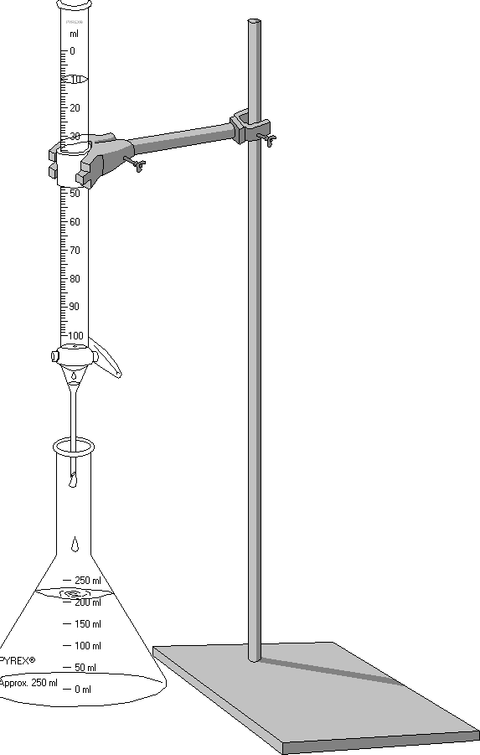
Burette

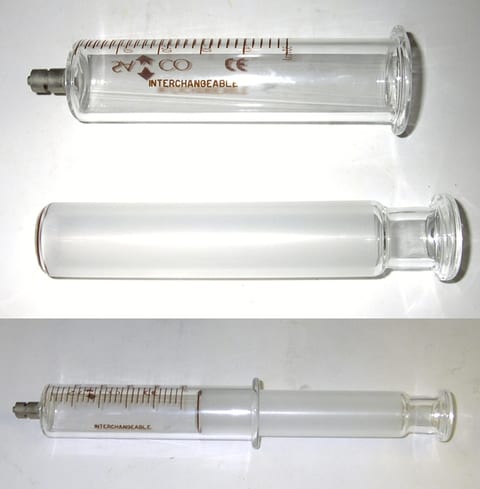
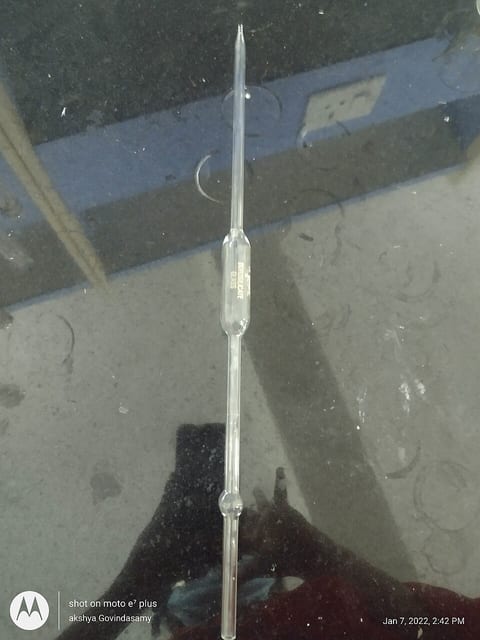
A long glass tube with a tap and a scale, used to add a measured volume of solution a little at a time, as in a titration.

Notes: Titrations

C

Calibration curve

A graph of instrument readings for known concentrations, used to find an unknown concentration.

Notes: Instrumental analysis

Carbon capture and storage

Collecting carbon dioxide from places like power stations and storing it, e.g. underground.

Notes: Carbon footprint

Carbon footprint

The total amount of carbon dioxide and other greenhouse gases emitted over the full life cycle of a product, service or event.

Notes: Carbon footprint

DiamondGraphiteGrapheneC₆₀Nanotube

Carbon nanotube

A cylindrical fullerene with a very high length to diameter ratio; strong and conducts electricity.

Notes: Carbon structures

Carbon neutral

Causing no overall increase in the amount of greenhouse gases in the atmosphere.

Notes: Carbon footprint

Carbon offsetting

Balancing out greenhouse gas emissions by actions that remove them, such as planting trees.

Notes: Carbon footprint

Cellulose

A natural polymer of sugar that strengthens plant cell walls.

Notes: Natural polymers

spotsolvent frontpaper (stationary phase)start linesolvent (mobile phase)

Chromatogram

The pattern of spots produced by chromatography.

Notes: Chromatography

spotsolvent frontpaper (stationary phase)start linesolvent (mobile phase)

Chromatography

Separating the substances in a mixture by how far a solvent (the mobile phase) carries each one through paper (the stationary phase).

Notes: Mixtures and separation · Chromatography

Collision theory

Particles react only when they collide with at least the activation energy.

Notes: Factors affecting rate

Compromise conditions

Conditions chosen to balance yield, rate, cost and safety, rather than to maximise any one of them.

Notes: The Haber process

Concordant results

Titres that are within 0.10 cm³ of each other.

Notes: Titrations

Condensation polymerisation

Joining monomers with two functional groups each, giving off a small molecule such as water at each link.

Notes: Synthetic polymers · Natural polymers

Continuous process

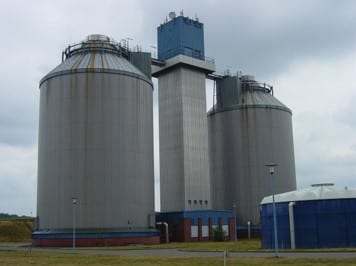
An industrial process that runs all the time, rather than in separate batches.

Notes: NPK fertilisers

Cracking

Breaking long-chain hydrocarbons into shorter, more useful alkanes and alkenes.

Notes: Cracking and alkenes

D

+−+−−+−++−+−−+−+HCl+++++++++IonicCovalentMetallic

Delocalised electrons

Electrons that are not tied to one atom and are free to move through a structure.

Notes: Metallic bonding and alloys · Carbon structures

Diatomic

Made of molecules containing two atoms, such as Cl₂.

Notes: Groups 0, 1 and 7

Displacement reaction

A reaction where a more reactive element takes the place of a less reactive one in a compound.

Notes: Groups 0, 1 and 7

DNA

Deoxyribonucleic acid: a natural polymer of two strands in a double helix that carries genetic instructions.

Notes: Natural polymers

+−+−−+−++−+−−+−+HCl+++++++++IonicCovalentMetallic

Dot and cross diagram

A diagram showing the electrons of different atoms as dots and crosses, to show how they bond.

Notes: Ionic bonding

Double helix

The shape of DNA: two strands twisted around each other.

Notes: Natural polymers

Dynamic equilibrium

The state in a closed system where the forward and reverse reactions happen at the same rate, so concentrations stay constant.

Notes: Reversible reactions and equilibrium

E

+++−−−electron shellneutronelectronprotonnucleus

Electronic structure

How an atom's electrons are arranged in shells, e.g. 2,8,1 for sodium.

Notes: Atomic structure and isotopes

+−+−−+−++−+−−+−+HCl+++++++++IonicCovalentMetallic

Electrostatic attraction

The force that pulls oppositely charged particles together, such as the positive and negative ions in an ionic compound.

Notes: Ionic bonding · Metallic bonding and alloys

End point

The point in a titration where the indicator changes colour, showing the reaction is complete.

Notes: Titrations

Energy change

The overall energy transferred in a reaction: negative if exothermic, positive if endothermic.

Notes: Bond energies

Ernest Rutherford

The scientist who led the alpha particle scattering experiment and concluded that an atom's mass and positive charge are in a tiny nucleus: the nuclear model.

Notes: Development of the atomic model

F

Fermentation

Making ethanol and carbon dioxide from sugar using yeast, without oxygen.

Notes: Alcohols

Flame emission spectroscopy

An instrumental method that analyses the light from a sample in a flame to identify metal ions and their concentrations.

Notes: Instrumental analysis

Frequency of collisions

How often particles collide, e.g. the number of collisions per second.

Notes: Factors affecting rate

DiamondGraphiteGrapheneC₆₀Nanotube

Fullerene

A molecule of carbon atoms with a hollow shape, such as Buckminsterfullerene (C₆₀).

Notes: Carbon structures

G

General formula

A formula that fits every member of a homologous series, such as CₙH₂ₙ₊₂ for the alkanes.

Notes: Crude oil and alkanes

+−+−−+−++−+−−+−+HCl+++++++++IonicCovalentMetallic

Giant ionic lattice

A regular 3D arrangement of oppositely charged ions held together by strong electrostatic forces in all directions.

Notes: Ionic bonding

+−+−−+−++−+−−+−+HCl+++++++++IonicCovalentMetallic

Giant structure

A huge network of atoms or ions held in a regular arrangement by strong bonds, such as diamond or sodium chloride.

Notes: Ionic bonding · Metallic bonding and alloys

Global climate change

Long-term changes to the Earth's climate, including rising average temperatures, caused by more greenhouse gases.

Notes: Greenhouse gases and climate change

Global dimming

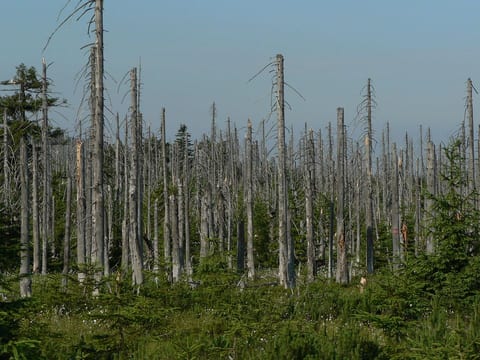
A reduction in the sunlight reaching the Earth's surface, caused by particulates in the air.

Notes: Atmospheric pollutants

Glowing splint

A wooden splint with its flame blown out but still glowing; it relights in oxygen.

Notes: Tests for gases

DiamondGraphiteGrapheneC₆₀Nanotube

Graphene

A single layer of graphite, one atom thick; strong, light and conducts electricity.

Notes: Carbon structures

H

HDPE (high density poly(ethene))

A form of poly(ethene) made with a different catalyst and conditions from LDPE, giving a stronger, more rigid plastic used for bottles and pipes.

Notes: Alloys, ceramics, polymers and composites

Homologous series

A family of compounds with the same general formula and similar chemical properties.

Notes: Crude oil and alkanes

Hydration

Adding water (steam) across a C=C double bond, using a catalyst, to make an alcohol.

Notes: Reactions of alkenes

Hydrogenation

Adding hydrogen across a C=C double bond, using a catalyst, to make an alkane.

Notes: Reactions of alkenes

I

−++−positive ioncathoded.c. supplynegative ionanodeelectrolyte

Inert electrode

An electrode, such as graphite, that does not react during electrolysis.

Notes: Electrolysis of aqueous solutions

Instrumental method

A way of analysing substances using machines, often accurate, sensitive and rapid.

Notes: Instrumental analysis

+−+−−+−++−+−−+−+HCl+++++++++IonicCovalentMetallic

Ionic bond

The strong electrostatic attraction between oppositely charged ions.

Notes: Groups 0, 1 and 7 · Ionic bonding

J

James Chadwick

The scientist whose experiments, about 20 years after the nucleus was accepted, gave the evidence for neutrons in the nucleus.

Notes: Development of the atomic model

K

kJ/mol

Kilojoules per mole: the unit for bond energies and energy changes.

Notes: Bond energies

L

LDPE (low density poly(ethene))

A form of poly(ethene) made with a different catalyst and conditions from HDPE, giving a flexible plastic used for carrier bags.

Notes: Alloys, ceramics, polymers and composites

Life cycle

Every stage of a product's life, from raw materials to disposal.

Notes: Carbon footprint

M

Mendeleev

The chemist who, in 1869, arranged the elements with gaps for undiscovered elements and predicted their properties.

Notes: The periodic table

+−+−−+−++−+−−+−+HCl+++++++++IonicCovalentMetallic

Metallic bond

The strong electrostatic attraction between positive metal ions and delocalised electrons.

Notes: Ionic bonding · Metallic bonding and alloys

Methane

CH₄, the simplest alkane and the main part of natural gas. It's a greenhouse gas, given off by cattle, rice fields and landfill.

Notes: Greenhouse gases and climate change

spotsolvent frontpaper (stationary phase)start linesolvent (mobile phase)

Mobile phase

The phase that moves in chromatography, such as the solvent.

Notes: Chromatography

Molar gas volume

The volume of one mole of any gas: 24 dm³ at RTP.

Notes: Gas volumes

Molten

Melted: turned from a solid into a liquid by heating. Ionic compounds conduct electricity when molten because their ions can move.

Notes: Electrolysis of molten compounds

N

Nanoparticle

A particle between 1 and 100 nm across, made of a few hundred atoms.

Notes: Nanoscience

Nanoscience

The study of structures 1–100 nm in size and their properties.

Notes: Nanoscience

NPK fertiliser

A formulation of compounds containing nitrogen, phosphorus and potassium to help crops grow.

Notes: NPK fertilisers
Nuclear model

A model of the atom with a tiny, positive nucleus containing almost all the mass, surrounded by electrons.

Notes: Development of the atomic model

Nucleotide

The monomer of DNA, containing one of the bases A, T, C or G.

Notes: Natural polymers

O

reactantsproductsEnergyProgress of reactionExothermicreactantsproductsEnergyProgress of reactionEndothermic

Overall energy change

The difference in energy between the reactants and the products.

Notes: Reaction profiles · Bond energies

Oxides of nitrogen (NOₓ)

Pollutant gases formed when nitrogen and oxygen react at high temperatures, e.g. in car engines.

Notes: Atmospheric pollutants

P

Particle model

A model that explains solids, liquids and gases by the arrangement and movement of their particles.

Notes: States of matter

Percentage yield

The mass of product made as a percentage of the maximum theoretical mass.

Notes: Yield and atom economy

Period

A row of the periodic table; its elements have the same number of electron shells.

Notes: The periodic table

Phosphate rock

A mined rock containing phosphorus; insoluble, so it is treated with acids to make fertilisers.

Notes: NPK fertilisers
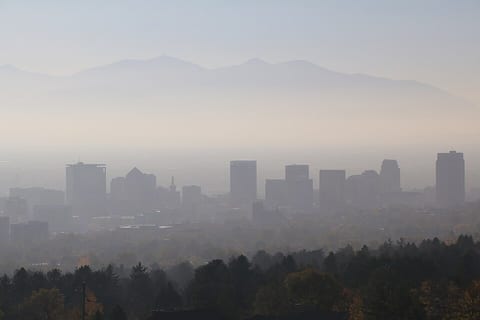
Photosynthesis

The process in algae and plants that uses carbon dioxide and water to make glucose and oxygen.

Notes: The Earth's atmosphere

Physical change

A change in which no new substance is made, such as melting, boiling or dissolving. It can usually be reversed.

Notes: States of matter

Polyester

A condensation polymer made from a diol and a dicarboxylic acid, with water given off as each link forms.

Notes: Synthetic polymers
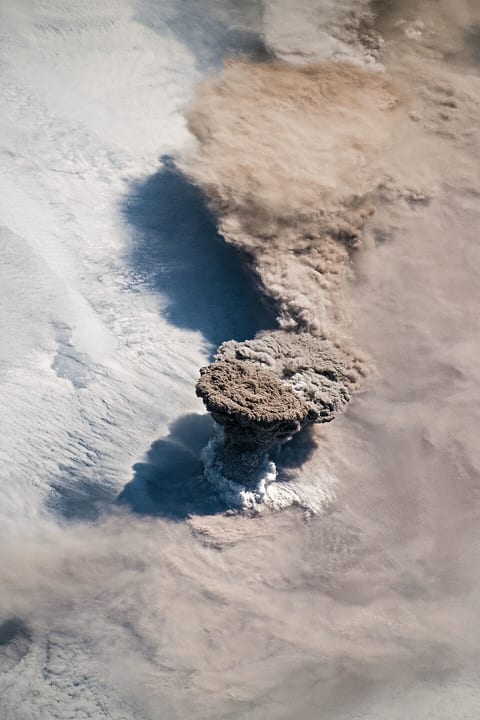
Polypeptide

A condensation polymer made from amino acids. Proteins are made of one or more polypeptides.

Notes: Natural polymers
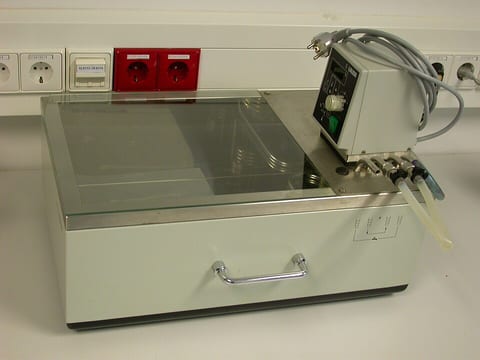
Potable water

Water that is safe to drink, with low levels of dissolved salts and microbes; not chemically pure.

Notes: Potable water

Protein

A natural polymer made of amino acids joined by condensation polymerisation.

Notes: Natural polymers

Pure substance

In chemistry, a single element or compound that is not mixed with any other substance.

Notes: Purity and formulations

R

Reaction pathway

The route from reactants to products: the energy path shown on a reaction profile, or the series of reactions used to make a product.

Notes: Yield and atom economy · Catalysts

reactantsproductsEnergyProgress of reactionExothermicreactantsproductsEnergyProgress of reactionEndothermic

Reaction profile

A graph showing how the energy changes as reactants turn into products.

Notes: Reaction profiles

Reactivity series

A list of metals in order of how reactive they are, from most to least reactive.

Notes: Reactivity of metals

Repeating unit

The part of a polymer that repeats along the chain, drawn in brackets with n.

Notes: Synthetic polymers

Reverse osmosis

A way of desalinating water by pushing salty water through a membrane that lets water through but not the dissolved salts.

Notes: Potable water

spotsolvent frontpaper (stationary phase)start linesolvent (mobile phase)

Rf value

Distance moved by a substance ÷ distance moved by the solvent; used to identify substances.

Notes: Chromatography

RTP

Room temperature and pressure: 20 °C and 1 atmosphere.

Notes: Gas volumes

S

Screening

The first stage of sewage treatment, which removes large objects, such as rags and plastics, and grit.

Notes: Waste water treatment

Sedimentary rock

Rock formed from layers of sediment, such as limestone, which can lock up carbon.

Notes: The Earth's atmosphere

Sedimentation

A stage of sewage treatment in which solids settle out, giving sewage sludge at the bottom and liquid effluent above it.

Notes: Waste water treatment

Sewage

Waste water from homes, containing organic matter and harmful microbes.

Notes: Waste water treatment

Sharp melting point

Melting at one specific temperature, a sign that a substance is pure.

Notes: Purity and formulations

Shielding

Inner electron shells reducing the attraction between the nucleus and the outer electrons.

Notes: Groups 0, 1 and 7

Silver nitrate

The reagent used to test for halide ions; it forms coloured precipitates with them.

Notes: Identifying negative ions

spotsolvent frontpaper (stationary phase)start linesolvent (mobile phase)

Solvent front

The furthest point the solvent reaches up the paper.

Notes: Chromatography

Standard form

A way of writing very large or small numbers, such as 6.02 × 10²³.

Notes: Moles

State symbols

Letters in an equation showing each substance's state: (s), (l), (g) or (aq).

Notes: States of matter

spotsolvent frontpaper (stationary phase)start linesolvent (mobile phase)

Stationary phase

The phase that doesn't move in chromatography, such as the paper.

Notes: Chromatography

Sterilising

Killing harmful microbes, e.g. with chlorine, ozone or UV light.

Notes: Potable water

Sulfur dioxide

SO₂, a gas made when fuels containing sulfur burn. It causes acid rain and breathing problems.

Notes: Atmospheric pollutants

T

Tangent

A straight line that touches a curve at one point, with the same steepness as the curve there.

Notes: Measuring rates of reaction

Titre

The volume of solution added from the burette to reach the end point.

Notes: Titrations

Triple bond

Three shared pairs of electrons between the same two atoms, as in N₂.

Notes: Covalent bonding

U

V

W

Word equation

An equation that shows a reaction using the names of the substances, such as magnesium + oxygen → magnesium oxide.

Notes: Atoms, elements and compounds

Y

Yeast

A single-celled fungus whose enzymes carry out fermentation.

Notes: Alcohols